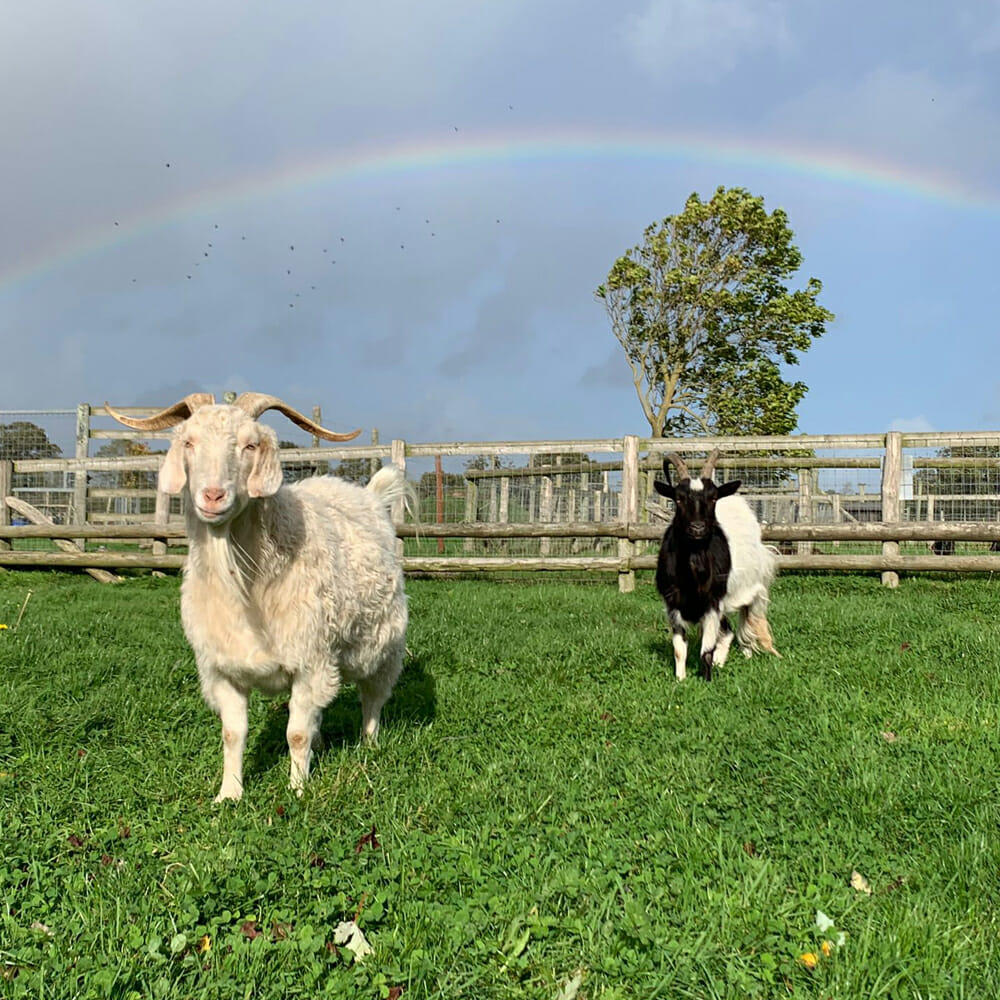
Young goats are aptly named kids as they have many qualities similar to human children. They are energetic, bouncy and mischievous (always pushing their luck!). They are inquisitive escape artists and have a habit of exploring with their mouths! A goat has an IQ of 60! If you ever consider keeping a goat as a pet you need to have good fences and good neighbours as you could be seeing a lot of them!
There are opportunities throughout the day for your children to meet and feed the goats. Please check the daily timetable when you visit for timings.
Farmer Palmer says...
• A male goat is called a billy. A female goat is a nanny and a baby is a kid.
• They make a baaa bleating sound.
• They all have different markings, can you see the differences?
• Goats like to live in herds (with other goats).
• Goats will not eat dirty or old food.
Farmer Palmer's animals are traditional farm animals, together with popular pet animals like guinea pigs and rabbits. They are taken care of by our dedicated team in the Animal Barn in line with Defra's Farm Animal Welfare Council's Five Freedom Advice.
Donkeys
Hamerton Toby, the miniature Mediterranean donkey is very friendly, although he does like to get his own way.
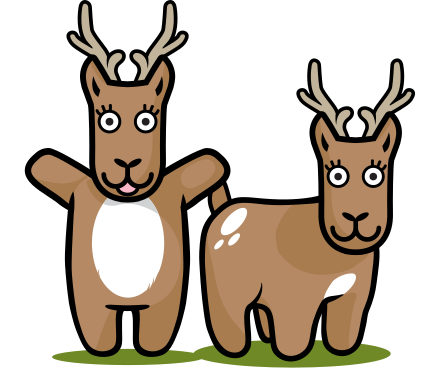
A herd of Red Deer live at Farmer Palmer’s and you and your children can meet and feed them in our Deer Feeding experience (check timetable to see if this event is running).
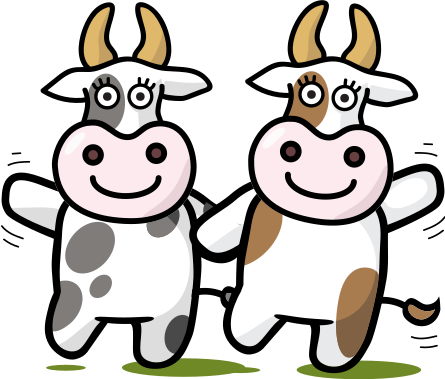
We have several cows on the farm park. You can sometimes see them grazing out in the fields. Our daily animal events are advertised at the front desk, you’re welcome to take a photo of the timetable.
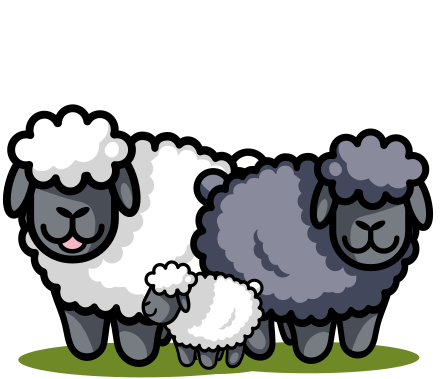
Farmer Palmer’s is home to lots of sheep. Each year, many of our ewes have lambs. You can see the babies out in the fields skipping and jumping. Their mums are very protective and caring.
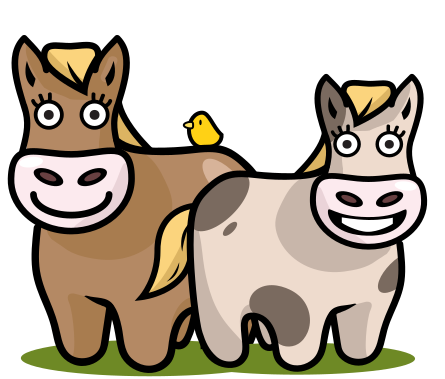
Our ponies adore praise and are eager to please, most of the time. In the summer they live outside in the field or paddock and eat grass and a little pony food. In the winter they come in and eat hay. They must always have fresh, clean water.
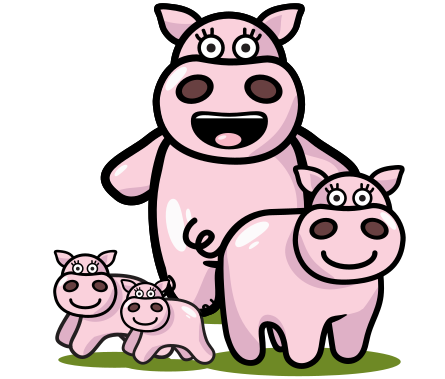
Pigs do not like being muddy or dirty during the winter. In hot summer months they cover themselves in cool mud & water to regulate their body temperature – because pigs cannot sweat!